
Spain 1-0 Argentina: Torres Wins World Cup 2026 in Extra Time
It took 106 minutes, a red card, a controversially disallowed goal, and a goalkeeper playing the game of his life at the other end, but Spain finally got the moment they had been building toward all tournament. Ferran Torres struck 39 seconds into the second period of extra time to hand La Roja a 1-0 win over Argentina at New York/New Jersey Stadium, crowning Spain world champions for the second time and bringing Lionel Messi’s international career to a bruising, agonising close.
Table of Contents
A final that refused to open up
For long stretches, this looked like exactly the kind of final Spain had been threatening to produce all tournament total control, without the finishing touch to match it. Luis de la Fuente’s side dominated from the first whistle, denying Argentina a single shot in the entire first half and restricting Messi to just 15 touches of the ball across the whole match, compared to 26 for 18-year-old Lamine Yamal at the other end. Argentina’s best and effectively only clear sight of goal came inside the opening five minutes, when Julián Álvarez slid Messi through with only goalkeeper Unai Simón to beat, but Simón got there first to smother the chance before it could develop.
From there, the game settled into a familiar shape: Spain pressing for the breakthrough, Argentina absorbing wave after wave through sheer defensive discipline and one heroic performance in goal. Emiliano Martínez finished the match with ten saves a new World Cup final record and kept Argentina in a game their underlying numbers suggest they had no real business still being level in. Spain closed the match with 20 shots to Argentina’s two and an expected-goals total of 1.94 against a barely-there 0.20 for La Albiceleste.
The moment that turned it
Argentina’s night unravelled in second-half stoppage time when Enzo Fernández, already on a yellow card, went into a reckless challenge on Pau Cubarsí and was shown a second booking, reducing Scaloni’s side to ten men heading into extra time. Spain thought they had made the extra man count almost immediately when Nico Williams turned home a close-range effort, only for the goal to be ruled out after Mikel Merino was judged to have fouled Nicolás Otamendi in the build-up sparing Argentina, momentarily, and sending the tension in the stadium up another level.
It did not spare them for long. Early in the second period of extra time, Yamal drove at Argentina’s tired backline, beat two defenders, and squared for substitute Ferran Torres, who thumped a close-range finish past Martínez to finally break the deadlock. Spain finally found the connection they had searched for all night, as two second-half substitutes combined to score the goal that won the World Cup.
A coronation for De la Fuente’s Spain
The victory completes an unbeaten campaign for Spain, who opened the tournament with a scoreless draw against debutants Cape Verde and proceeded to win every match after it, conceding just once across the entire competition. It is a second World Cup title for Spain, sixteen years after their first triumph in 2010, and confirms Luis de la Fuente now unbeaten in 14 wins and a single draw as manager as the oldest coach ever to win the tournament. Adding the World Cup to their European Championship crown from 2024 makes this Spain side one of the most complete international teams football has produced in years.

The end of an era for Messi
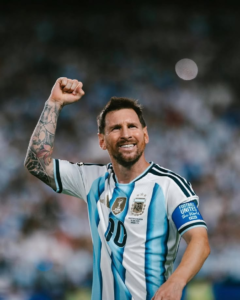
For Argentina, and for Messi in particular, the pain will linger. Messi had already hinted that the 2022 World Cup might be his last before deciding to return for one more tournament. Since then, he has suggested that this will genuinely be his final World Cup, as he would be 43 by the time the next tournament arrives in 2030. His country’s bid to become the first side since Brazil in 1958 and 1962 to win back-to-back titles, and his own bid to add a second World Cup medal to a career missing almost nothing else, both end in the same result: a final in which he barely got the ball, and in which his team could not find a way through.
There may yet be one more chapter Messi has left open the possibility of featuring at the 2028 Copa América but as a World Cup story, this appears to be the last page. Argentina’s players embraced him long after the final whistle, aware of exactly what the moment meant, even as Spain’s celebrations swept around them.
A show to match the occasion
Fittingly for a final of this magnitude, the pageantry around it matched the stakes. The pre-match and halftime entertainment featured performances from Shakira, Coldplay’s Chris Martin, BTS, and Justin Bieber, alongside Staten Island’s PS22 Chorus, closing out the tournament with a message of unity before Spain went out and settled the football with ruthless efficiency.
Four years from now, the World Cup returns and after this campaign, Spain will arrive as champions with every reason to believe they can do it all again.
Join us at Haba Naija for more football information.

Author: AbdulBasit Odurinde
I am a passionate sports and game lover. I write for Haba Naija on sports, games and other exciting events