
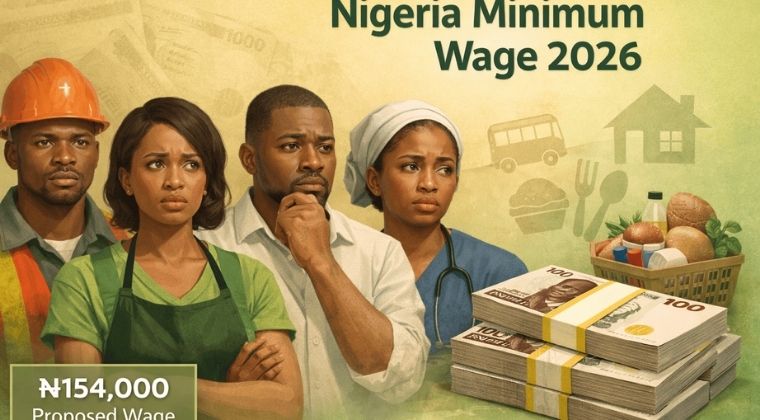
The Nigeria minimum wage 2026 debate comes at a time when economic hardship is deepening across the country, with many workers finding it increasingly difficult to meet basic needs. The rising cost of food, transportation, and housing has significantly reduced the purchasing power of the average salary
In response, the Nigeria Labour Congress (NLC) and the Trade Union Congress (TUC) have proposed a new minimum wage of ₦154,000, sparking nationwide conversations about whether this increase can truly ease the financial burden on workers.
According to reports from Channels Television, Punch Newspapers, and Nairametrics, the demand reflects growing concern over inflation and declining living standards in the country.
Table of Contents
What Is the New Minimum Wage Proposal?
The organised labour in Nigeria is pushing for a new national minimum wage of ₦154,000, a major increase from the current ₦70,000 minimum wage, which was approved in 2024.
Why ₦154,000?
Labour unions argue that:
- Inflation has significantly reduced the real value of wages
- The cost of basic necessities has more than doubled in recent years
- Workers can no longer sustain a decent standard of living
The proposal is intended to align wages with the current economic realities in Nigeria.
Why Nigerians Are Facing Hardship
The push for a higher minimum wage is tied directly to worsening economic conditions.
1. Rising Inflation
Nigeria has experienced persistent inflation, especially in food prices. According to data from the National Bureau of Statistics (NBS), food inflation has remained one of the highest contributors to rising living costs.
Staples like rice, garri, bread, and cooking oil have seen sharp price increases, making daily feeding a challenge for many households.
2. Fuel Price Increase
Following the removal of fuel subsidies, petrol prices surged nationwide. This has had a ripple effect on:
- Transportation fares
- Cost of goods and services
- Small business operations
In cities like Ibadan, Lagos, and Abuja, daily commuting costs have doubled for many workers.
3. High Cost of Living
Rent, electricity, school fees, and healthcare costs continue to rise. For many Nigerians, income growth has not kept pace with these expenses.
4. Naira Devaluation
The depreciation of the naira has increased the cost of imported goods, further worsening inflation and reducing purchasing power.
Will ₦154,000 Be Enough? (Reality Check)
While the proposed wage sounds significant, a closer look at monthly expenses tells a different story.
Typical Monthly Expenses (Urban Worker)
- Rent (shared or low-cost): ₦30,000 – ₦70,000
- Food: ₦50,000 – ₦80,000
- Transport: ₦25,000 – ₦50,000
- Utilities & basic needs: ₦15,000 ₦30,000
Estimated total: ₦120,000 – ₦230,000+
For a single person, ₦154,000 may offer some relief. However, for workers supporting families, it may still fall short. From everyday observation, many Nigerians already rely on side hustles, family support and Informal income streams. Just to stay afloat. Exploring additional income streams is becoming increasingly necessary. Learn practical ways in How to Learn High-Paying Skills and Monetise Them in Nigeria.
Impact on Workers and Businesses
For Workers
- Improved ability to afford basic needs
- Reduced financial stress (short-term)
- However, inflation could quickly reduce its impact
For Employers
- Small and medium-sized businesses may struggle with increased wage bills
- Potential for job cuts or slower hiring
- Possible increase in prices of goods and services
Government Response and Current Situation
Negotiations between labour unions and the federal government are still ongoing. The government is expected to consider:
- Fiscal capacity
- Economic stability
- Private sector sustainability
As reported by major Nigerian media outlets, no final agreement has been reached yet.
What This Means for Nigerians
Even if the ₦154,000 minimum wage is approved, it may not completely solve the hardship problem. Why?
- Inflation may continue to rise
- Businesses may transfer costs to consumers
- Structural economic challenges remain
This means wage increases alone are not enough without broader economic reforms.
How Nigerians Can Cope with Rising Costs (Practical Insight)
Based on current realities, many Nigerians are already adapting in the following ways:
- Taking on side hustles (freelancing, small trading, online work)
- Reducing non-essential expenses
- Buying food items in bulk to save costs
- Sharing accommodation to reduce rent burden
These strategies reflect the real, everyday adjustments people are making to survive the economic situation. For those looking to boost income effectively, discovering high-paying skills is one of the best strategies. (See: How to Learn High-Paying Skills and Monetise Them in Nigeria to start earning more today.)
The proposed ₦154,000 minimum wage in Nigeria highlights the urgent need to address the country’s rising cost of living. While it may provide temporary relief for workers, it is not a complete solution to the economic hardship many Nigerians face.
For long-term impact, wage increases must be supported by policies that control inflation, stabilize the naira, and improve economic productivity.
Frequently Asked Questions about Minimum Wage in Nigeria
What is the proposed minimum wage in Nigeria for 2026?
Labour unions have proposed a new minimum wage of ₦154,000 to replace the current ₦30,000.
Why does Nigeria want to increase the minimum wage?
Due to rising inflation, high cost of living, and increasing economic hardship among workers.
Is ₦154,000 enough to live comfortably in Nigeria?
It may help, but for many Nigerians, especially those with dependents, it may still not be sufficient.
Has the government approved the new minimum wage?
As of now, discussions are ongoing and no final decision has been made.
When will the new minimum wage take effect in Nigeria?
The proposed N154,000 minimum wage has not yet been approved. Its implementation will depend on the outcome of ongoing negotiations between labour unions and the federal government.
Who proposed the N154,000 minimum wage?
The proposal was made by the Nigeria Labour Congress (NLC) and the Trade Union Congress (TUC) as part of efforts to improve workers’ welfare.
What is the difference between the old and new minimum wage in Nigeria?
The current minimum wage is N70,000, approved in 2024, while the proposed wage is N154,000, representing a significant increase aimed at addressing inflation and hardship.
Will private companies pay the new minimum wage?
If approved, the new minimum wage is expected to apply to both public and private sector employers, although compliance may vary depending on company size and capacity.

Author: Adebukola Ogunremi
Adebukola Ogunremi is a Nigerian writer who creates content on personal finance, career growth, workplace trends, culture, lifestyle and money habits, helping readers make smarter financial and professional decisions. She is also a God-fearing Woman with brains🙂